
 Image 1 of 2
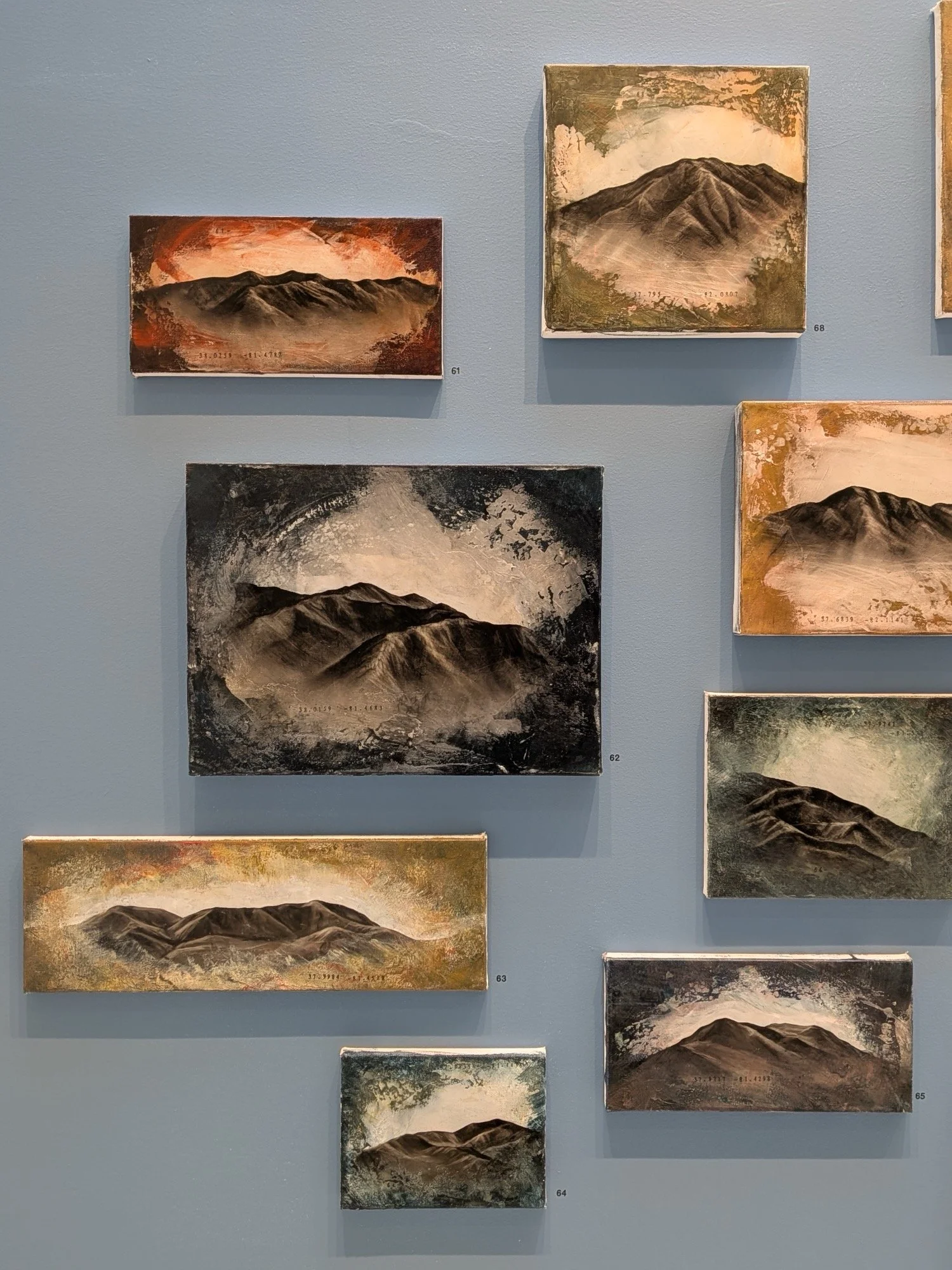 Image 2 of 2
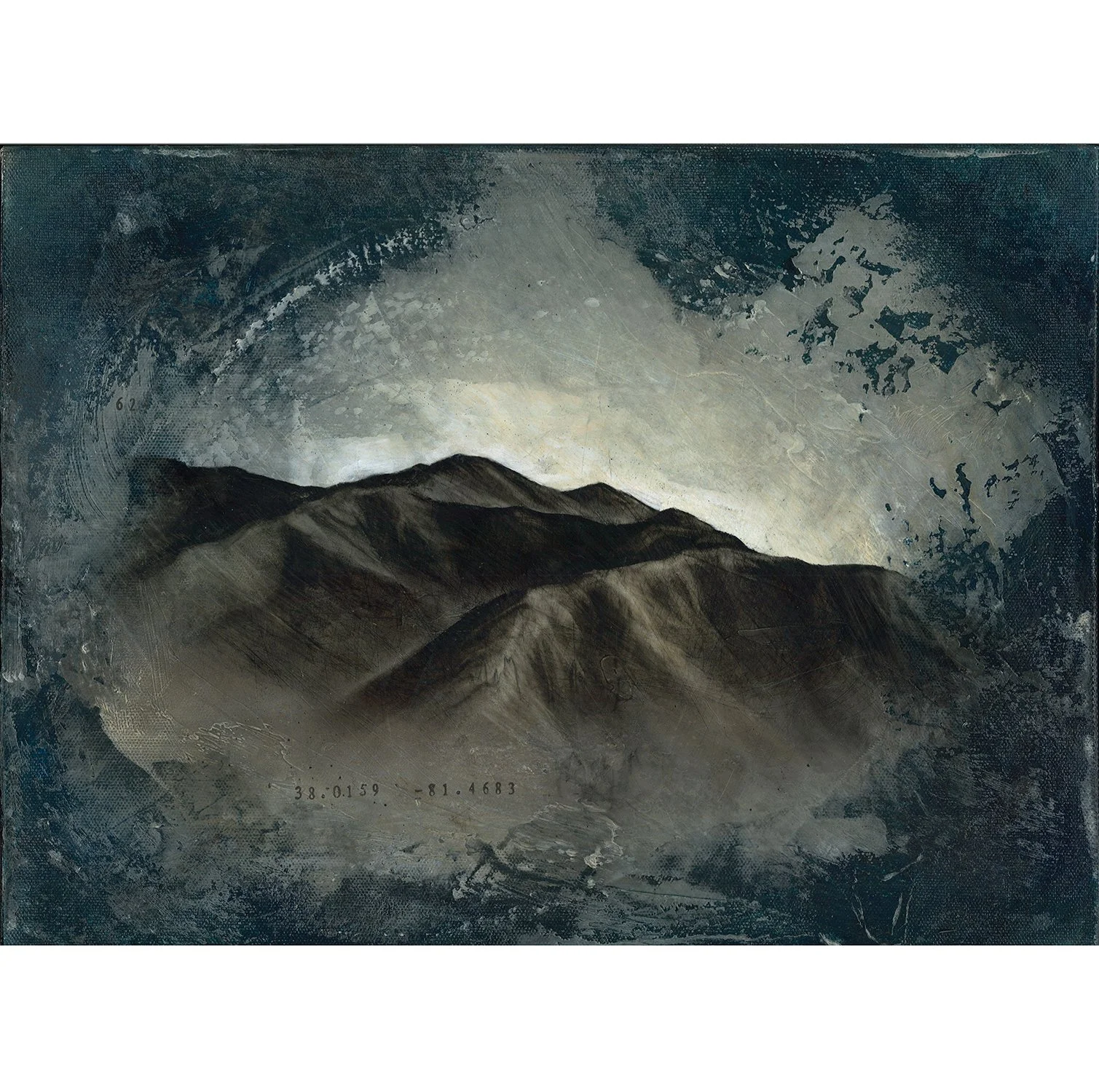
With memories of my upbringing in West Virginia, I created this series of mountain paintings as both a love letter and a memorial to my native Appalachia. Each mountain silhouette is intended to exhibit the beauty and sacredness of God’s creation as seen in one of the most ancient ranges on earth, the Appalachian Mountains. But each “portrait” also marks a very specific loss in the region, reflected in the GPS coordinates stamped in the margins. These locations, mostly in the poorest counties of West Virginia and Kentucky, are where a violent and mechanized coal mining practice has proliferated known as Mountain Top Removal. (MTR)
The paintings are made using ground bituminous coal mixed with charcoal, allowing the extracted material itself to help form the image. This process produces ashen, ghostlike remembrances of affected mountaintops. As a result, each painting holds a quiet tension between visual beauty and environmental loss. The count stops at 150 in order to echo the Psalms which hold a similar dichotomy, expressing the ends of human emotion from praise and gratitude to sorrow and lament.